Technology
A tool is only as useful as the decision behind it.
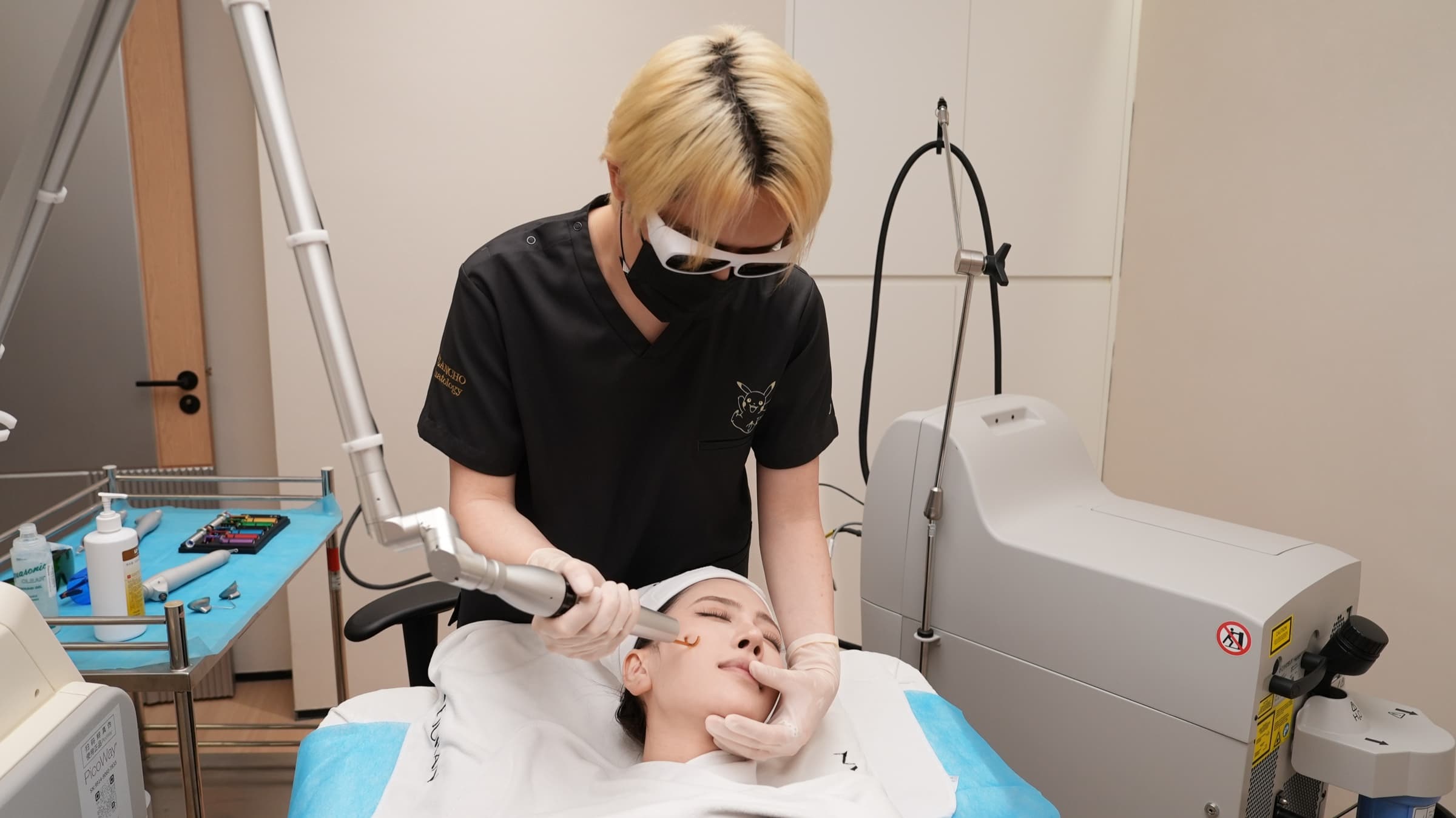
Lasers, energy-based devices and other technologies are designed to interact with different targets, depths and tissue responses. Even technologies within the same category may have different clinical roles. The important question is not whether a device is available. It is whether that technology is appropriate for the problem being treated — and how its settings, timing and combination with other approaches should be determined for the individual patient.
Technology supports the treatment plan. It does not create the treatment plan.
Two treatments performed with the same device are not necessarily the same treatment. Settings, depth, coverage, passes, endpoint, technique and treatment interval can change the tissue response and recovery profile. These decisions follow the indication, patient characteristics and treatment objective — not the device alone.
Technologies
Precision, applied with clinical judgment.
Target pigment & vascular signals
Visible color has a cause — pigmentary, vascular, inflammatory or mixed — and the wavelength or platform is selected to match that cause, not the other way around.
Picosecond, multi-wavelength; wavelength and applicator are chosen for the depth and type of pigment identified.
Pulsed-dye laser centered on vascular targets — diffuse redness and discrete visible vessels are treated as different problems.
Dual-wavelength (755 nm Alexandrite, 1064 nm Nd:YAG); wavelength selection follows diagnosis, not device availability.
A configurable platform addressing different pigment, vascular and resurfacing targets — one component, or a sequence, as the problem requires.
Remodel skin quality
Texture, pores and scarring are addressed by remodeling the tissue that creates the surface, at a depth chosen for the target — not by resurfacing indiscriminately.
RF microneedling; depth and mode are chosen according to the tissue target rather than applied uniformly.
Controlled microchannels at a planned depth, for selected scar, wrinkle and texture concerns — depth and device follow the indication.
Support firmness & lifting
Declining firmness is treated as a tissue-quality question first. Anatomy, depth and degree of change decide whether a firming approach is appropriate — not a default reach for volume.
Dermal ultrasound treatment considered within firmness and skin-quality planning.
Real-time tissue visualization paired with microfocused ultrasound delivered at defined depths — anatomy guides where treatment belongs.
Non-invasive radiofrequency tissue heating in service of a firmness and collagen-remodeling strategy, not a default "tightening" treatment.
Address sebaceous biology
Active acne is treated at its biological source, separately from the pigment, redness or scarring it can leave behind.
A 1726 nm laser targeting sebaceous-gland-driven acne pathway, rather than the marks acne leaves behind.
Support treatment delivery
Not every technology on this site is the primary treatment. Some improve how another procedure is delivered, tolerated or supported.
A precision cooling platform, described according to the exact workflow it supports rather than marketed as a standalone treatment.
Not sure which technology is relevant? Start with the concern, not the device.