Start with the concern
Start with what you notice.
Most patients do not arrive with a diagnosis. They arrive because something looks or feels different — uneven color, persistent redness, larger-looking pores, breakouts, scars, softer definition, looser skin, or a face that simply looks more tired than it used to. The purpose of the assessment is to determine what is creating that change.
Skin quality
Pigmentation & uneven tone — Cause and depth decide what is safe to use — not every dark mark responds to the same treatment.
Redness & visible vessels — Diffuse redness and discrete visible vessels are not necessarily treated the same way.
Texture & enlarged pores — Sebum, acne history, scarring, photodamage and collagen change can all affect how texture and pores appear.
Dullness & overall skin quality — “Dullness” is a description, not a diagnosis — pigment, texture, hydration and vascular change can all reduce clarity.
Acne — Active acne and the marks or scars it leaves behind are different problems, assessed and treated separately.
Acne scars — Scars vary in shape, depth and tissue behavior — a single device is unlikely to be the right answer for every type.
Aging & facial change
Lines & wrinkles — A line seen at rest may have a different treatment logic from one primarily created by expression.
Skin laxity & loss of firmness — “Sagging” can describe several different changes — skin laxity, tissue descent and volume change are not the same thing.
Facial volume & contour — More volume is not automatically the solution to a changing facial contour.
Jawline & lower face — Definition can be influenced by laxity, tissue position, volume, submental fullness or skeletal anatomy — separately or together.
Under-eye / periorbital concerns — “Tired eyes” can mean hollowing, pigment, vessels, texture, puffiness or laxity — often more than one at once.
Overall facial aging — Different areas age at different rates. The objective is identifying what is contributing most, not treating every change.
Assessment
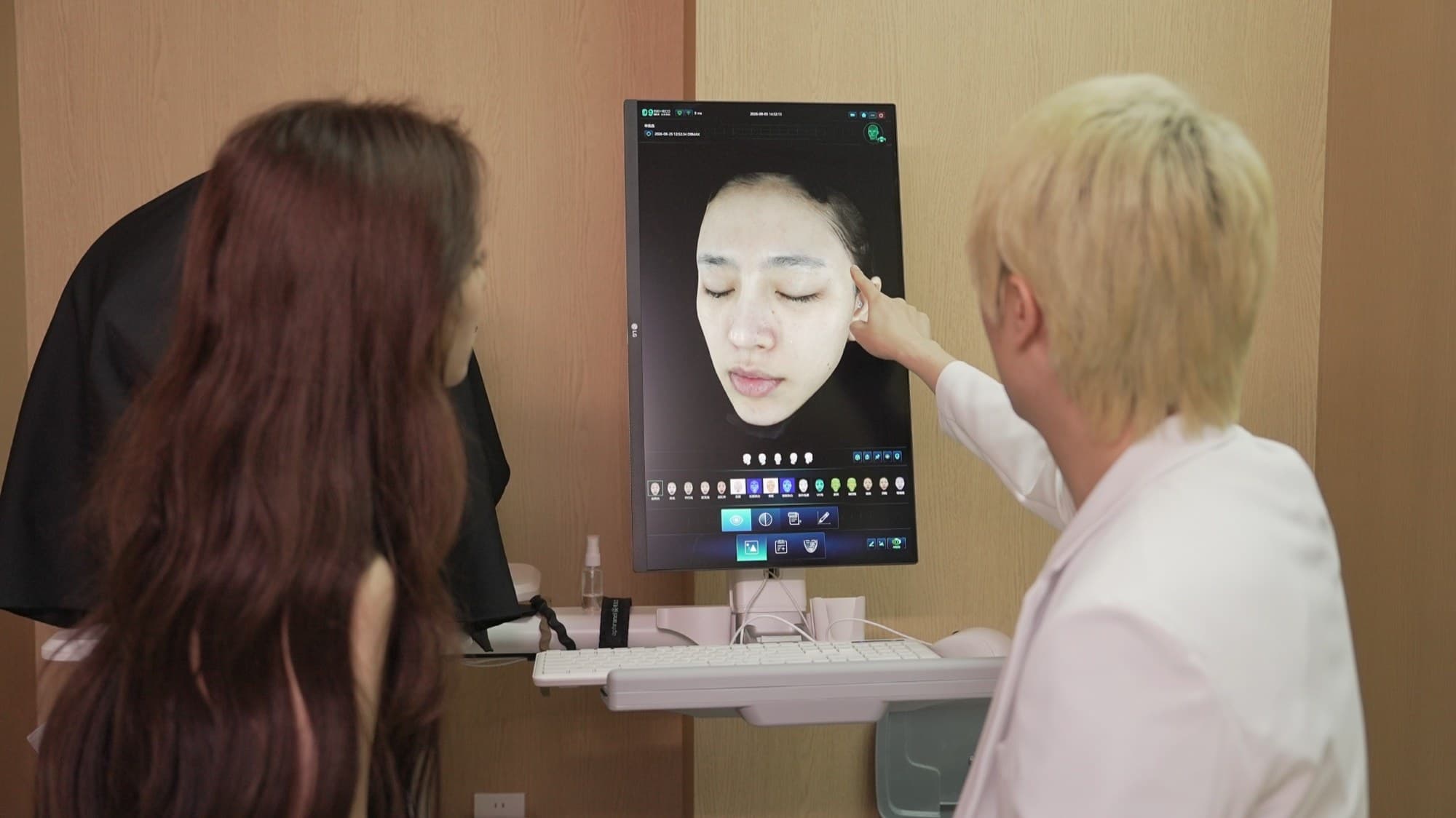
Assessment before treatment.
The same visible concern can come from different underlying causes. That is why the concern is the beginning of the conversation — not the treatment decision.