Technology
PicoWay
Picosecond, multi-wavelength laser platform
A picosecond, multi-wavelength laser platform used to target pigment at a depth and wavelength matched to what's actually present — not selected because a patient says the word "pigmentation."
What it is
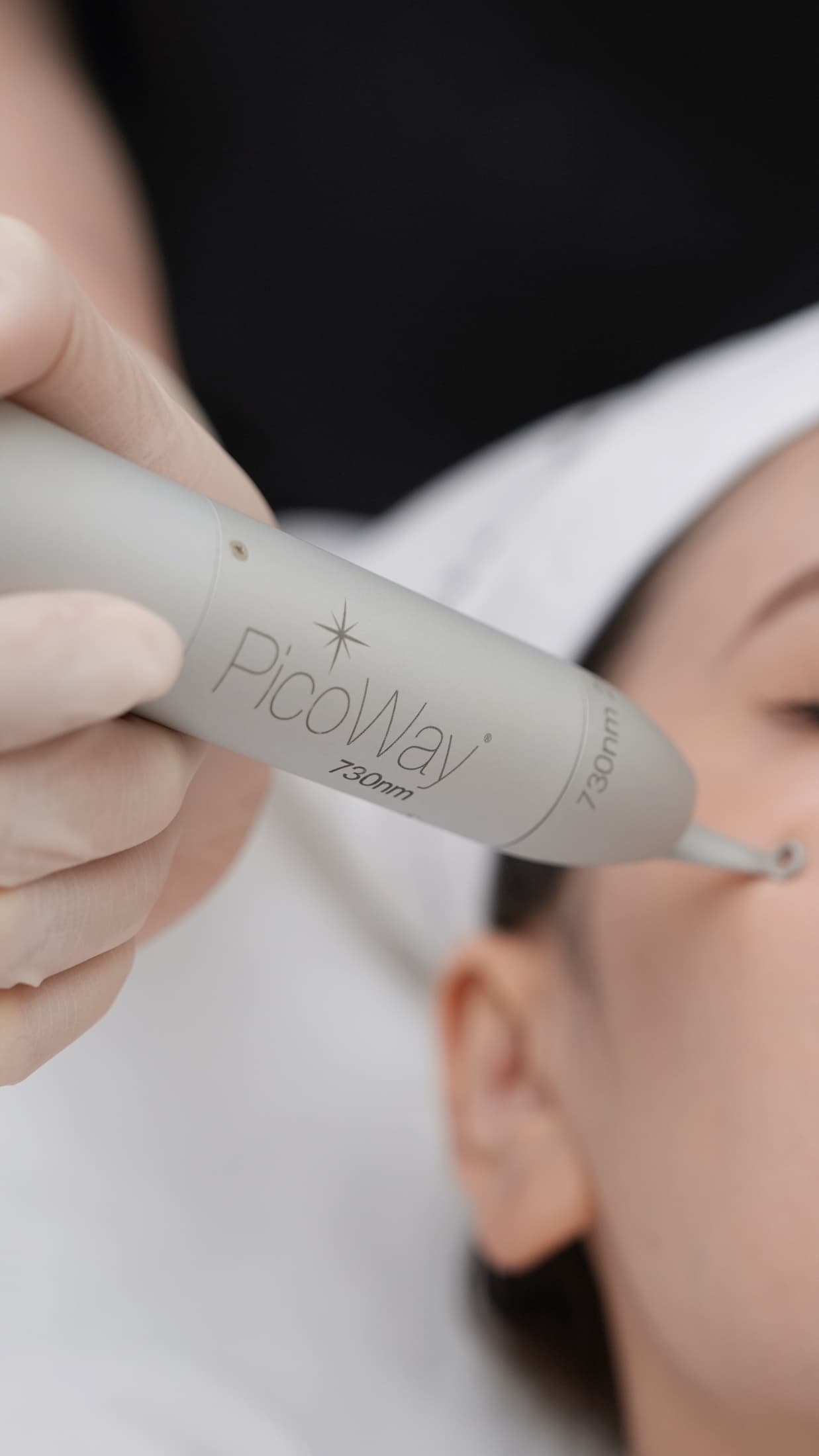
PicoWay is a picosecond laser platform built around more than one wavelength and applicator, not a single fixed configuration. Assessment identifies the target — the pigment's depth and type — and that finding decides which wavelength and applicator are used, not the reverse. One of the platform's applicators is manufacturer-documented at 730 nm with a 250 picosecond pulse duration; that's one available configuration, not a description of the platform as a whole.
How it works
Patients often describe all discoloration the same way, as "pigmentation," but visible pigment can differ in cause, depth, distribution and treatment risk. A multi-wavelength platform provides more than one option; the decision begins with identifying what's actually creating the color and at what depth — not with selecting the laser first.
Why wavelength matters
The wavelength is chosen — not assumed.
Assessment identifies what's creating the color and at what depth. That finding decides which wavelength and applicator are used — not platform capability, and not a default reach for this technology simply because pigment is the complaint. The platform runs more than one wavelength and applicator; one is manufacturer-documented at 730 nm with a 250 picosecond pulse duration, offered here as one available configuration, not the specification that defines PicoWay.
Where it may fit
PicoWay is one option within the Pigment & Vascular treatment family, considered where assessment finds pigment is genuinely the target.
How Dr. Lancho thinks about it
Pigmentation is one of the first components assessed when evaluating skin quality, alongside inflammation, vascular change, texture, skin characteristics and previous treatment response. The question is not whether this platform can address pigment — it can, for some pigment. It's what pigment is actually present, and whether this is the appropriate wavelength and strategy for it.
When another approach may make more sense
If redness, inflammation, texture or another process is contributing more to the appearance than pigment itself, a different technology or treatment family — within the Pigment & Vascular family or elsewhere in the system — may be the more logical choice.
Before your consultation
You don't need to name the wavelength.
Assessment determines whether this platform — and which of its options — is the appropriate match for what's actually there.